
Muscle Scraping Explained: What IASTM Actually Does (And What the Research Says)
Curious about muscle scraping or the Graston Technique? Learn how IASTM works, what scientific research says about pain relief and mobility, and why we use scraping tools during sports massage sessions at Armored Massage in Kansas City.
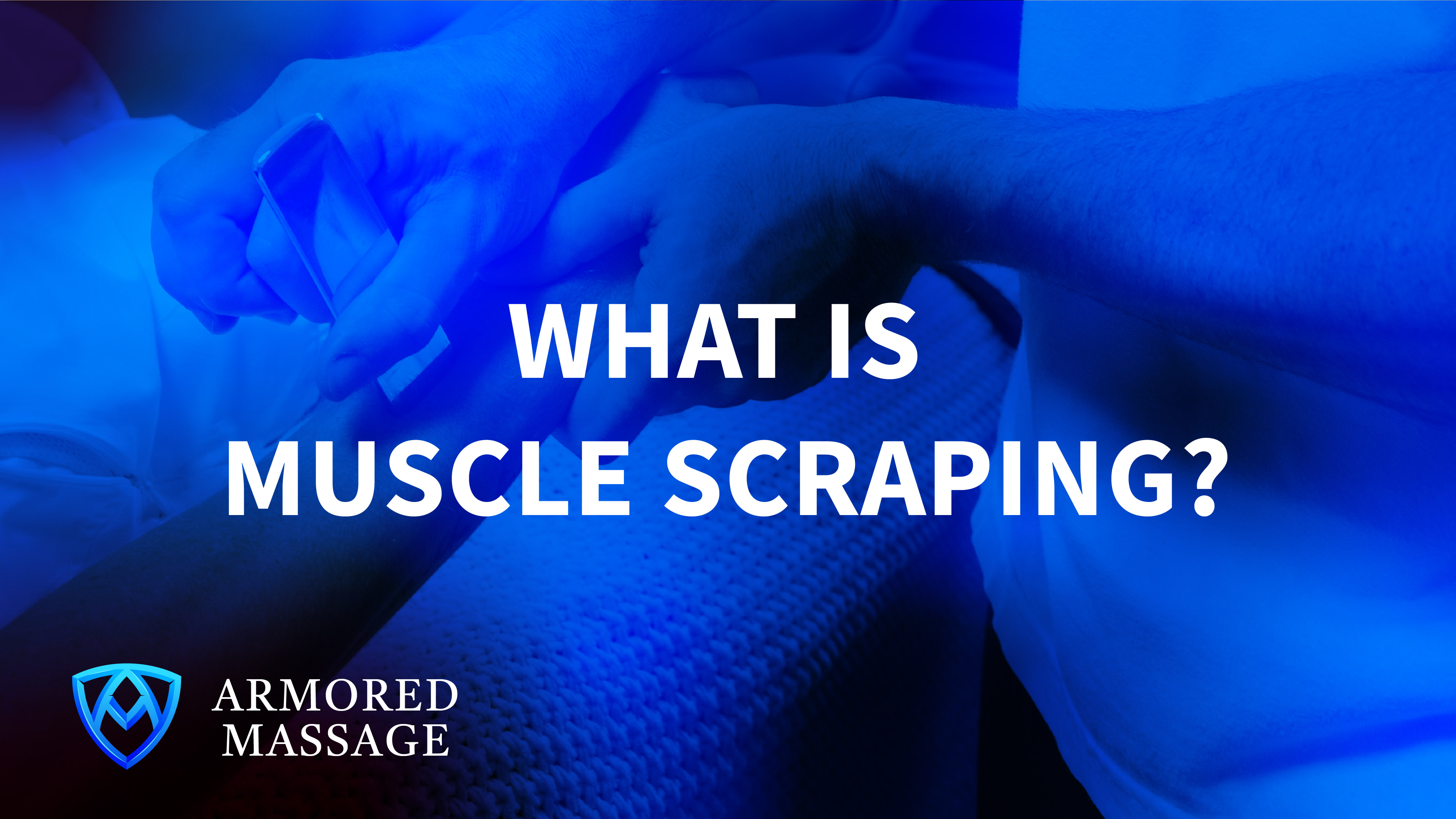
If you've ever seen us pick up a stainless-steel tool during your sports massage, you may have wondered:
What exactly is that thing doing to my muscles?
Fair question. Especially when people call the technique muscle scraping. It sounds a little more intense than it actually needs to be.
In our guide to sports massage recovery tools, we introduced the T-Tool and the scraping-style techniques we sometimes use at Armored Massage. Now let's go a little deeper: what happens when a metal tool glides over your skin, what science says about the benefits, and what scraping doesn't do.
First, What Is Muscle Scraping?
The more technical name is instrument-assisted soft tissue mobilization, or IASTM.
Instead of relying only on hands, thumbs, or elbows, a trained practitioner uses a smooth-edged tool to apply controlled pressure and gliding strokes across the skin. A small amount of lotion or another suitable product may help the tool move comfortably.
You might also hear the word Graston. Graston Technique® is a specific branded system within the broader world of instrument-assisted soft tissue work. It's not the name for every metal scraping tool or every IASTM session. Traditional gua sha is another related-looking practice, but it comes from a different history and treatment tradition.
At Armored Massage, we use the term IASTM because it accurately describes the type of tool-assisted soft tissue work we may incorporate into a sports massage.
So What Is the Scraping Tool Actually Doing?
1. Applying a different kind of pressure
A scraping tool lets us work with a specific edge, angle, and amount of pressure. As it moves across the skin, it creates a combination of pressure and movement in the tissues near the surface.
That can feel quite different from a thumb pressing straight down or an elbow applying broader compression. Sometimes that difference is useful when we're working with an area that feels uncomfortable, tight, or difficult to move.
The tool also gives our hands a break. That's not just our opinion: an article in Massage & Bodywork from the Associated Bodywork & Massage Professionals (ABMP) describes scraping tools as a way to apply angled pressure and discusses how tools can reduce strain on a practitioner's hands when used thoughtfully. Read ABMP's “Tool Time.”
2. Creating a short-term response in the treated area
Pressure and gliding strokes stimulate the skin and other soft tissues. You may notice warmth or temporary redness afterward.
In a 2014 study of 28 healthy adults, researchers found that both massage and Graston-style treatment increased skin temperature after treatment. Skin temperature was used as an indirect sign of possible blood-flow changes; the study didn't prove that scraping improves injury healing or athletic recovery.
Researchers are also exploring whether tool-assisted pressure changes pain sensitivity or how people experience movement. Those are possible explanations—not a fully proven account of exactly how IASTM works.
3. Possibly helping an area feel less painful or move more comfortably
For someone who feels restricted through the calves, shoulders, or another area, our goal may be to see whether a little targeted work helps them move more comfortably.
That doesn't mean we're physically carving knots out of a muscle. It means we're using another form of hands-on input and paying attention to how you respond.
Does Scraping Break Up Scar Tissue or Fascia?
This is where the internet gets a little carried away.
You may have heard that scraping tools "break up adhesions," "shred scar tissue," or "flush toxins" out of your body.
Those are not claims we can confidently make based on current human research.
Early laboratory and animal studies suggest that certain forms of instrument-assisted treatment may influence cells involved in connective tissue repair. That's interesting science, but results from animal tendons are not proof that a metal tool breaks apart scar tissue inside a human body during a massage. A clinical-practice review specifically notes that these proposed tissue-remodeling changes have not been confirmed in human trials.
ABMP raises a similar concern in its article about arthrofibrosis and scar tissue. It discusses a one-person case report involving the Graston Technique and exercise, while questioning whether the treatment literally "breaks down" scar tissue. One person's improvement is encouraging, but it can't tell us what will happen for everyone.
So if we use an IASTM tool, we're not promising to scrape away scar tissue. We're trying to support comfort and movement using pressure that makes sense for you.
Does Muscle Scraping Actually Work? Here's What Studies Say
The honest answer: it may help with some short-term outcomes, but the evidence is mixed.
- Pain: A 2025 systematic review and meta-analysis examined 11 randomized trials involving 427 people. It found that adding IASTM to other treatments may reduce patient-reported pain, with moderate-certainty evidence. Evidence for improved function was less certain.
- Range of motion: A 2024 meta-analysis pooled nine trials with 450 participants. It found some improvements in joint range of motion, but the researchers rated the certainty of that evidence as low to very low.
- The bigger picture: A 2022 review of 46 randomized trials was more skeptical. It found very-low-certainty evidence and did not identify clinically meaningful improvements in pain, movement, or function compared with other treatments. A newer 2026 analysis reported more promising results for pain and range of motion, but still highlighted differences between studies and the need for better research.
Why do the conclusions vary? Researchers study different body areas, use different tools and amounts of pressure, combine scraping with different treatments, and measure different outcomes. Many studies are small, and some have limitations that make it hard to separate the tool's effects from everything else happening during treatment.
Our takeaway: Scraping may be a helpful addition for some people. It's not a guaranteed fix, and we don't think it should replace the basics of recovery, appropriate exercise, or medical care when needed.
Is Muscle Scraping Supposed to Hurt or Leave Bruises?
You'll typically feel pressure and a gliding or scraping sensation. Some spots may be more sensitive than others, but more pain does not mean better results.
Redness can happen. Sometimes stronger scraping produces tiny red or purple spots called petechiae, which result from bleeding under the skin. That is not evidence of toxins leaving your body—and bruising is not a goal we need to chase.
We want you to tell us if a technique feels sharp, overwhelming, or just plain wrong. Please also mention anything that could affect whether this type of work is appropriate, including blood-thinning medication, a bleeding disorder, fragile or irritated skin, a recent surgery, or a new injury. We can adjust, avoid an area, or choose a different approach.
No medals are awarded for having the most dramatic-looking scraping marks afterward.
Why Might We Use IASTM at Armored Massage?
Because sometimes a particular angle or type of pressure feels useful for the person on the table.
We may incorporate scraping-style work when we're focusing on a specific area, exploring whether it helps you move more comfortably, or combining it with hands-on massage and movement. But we won't automatically reach for a tool just because you came in sore from training.
Your goals, injury history, comfort level, and response during the session matter more than the tool itself.
And if you're trying to get the most out of your appointment, our guide on how to get the most out of your sports massage covers the bigger picture before, during, and after a session.
The Bottom Line: It's a Tool, Not a Miracle Cure
We like IASTM for the same reason we like having a variety of recovery tools available: it gives us options.
The science suggests scraping may offer some benefits for pain and mobility, especially when used alongside other appropriate care. What it doesn't support is the idea that scraping magically erases scar tissue, releases toxins, or has to leave you bruised to be effective.
At Armored Massage in Kansas City, we're focused on helping athletes and active people feel better, move better, and make informed decisions about their recovery—not making the biggest possible claims about a shiny piece of metal.
Curious whether scraping-style work makes sense for you? Get in touch with Armored Massage or ask us about it at your next sports massage appointment. We'll explain what we're doing and why.
Research and Further Reading
- Tang et al. (2025). IASTM and its effects on pain and function: systematic review and meta-analysis.
- Tang et al. (2024). IASTM and range of motion: meta-analysis.
- Nazari et al. (2022). Updated systematic review of IASTM for upper-body, lower-body, and spinal conditions.
- Liu et al. (2026). IASTM for musculoskeletal disorders: systematic review and meta-analysis.
- Portillo-Soto et al. (2014). Comparison of blood-flow-related temperature changes after Graston-style treatment and massage.
- ABMP, Massage & Bodywork. “Tool Time” and “Arthrofibrosis”.
Subscribe to Armored Massage!
Get the Latest Updates, Exclusive Promotions, and Health & Wellness Tips
